Just like “Location” this is one of the most important elements of your house. When they are clean, functioning and free flowing…everything is just fine. One storm, one clog and the negative effects can be immediate. Let that blockage sit for a few weeks or an entire season and the downstream problems can get really pricey.
Basements—I tour a lot of homes with a subterranean lower level (AKA basement). If there is a wet spot on the concrete or a soggy corner or carpet, 95%* of the time you can go outside and see the evidence of an overflowing gutter. If it is a single event, the fix is easy: clear the clog and let the area dry out. If it has been happening for years, the repairs can get massive: dry-rot, mold, spalling concrete, undermined foundations, etc.
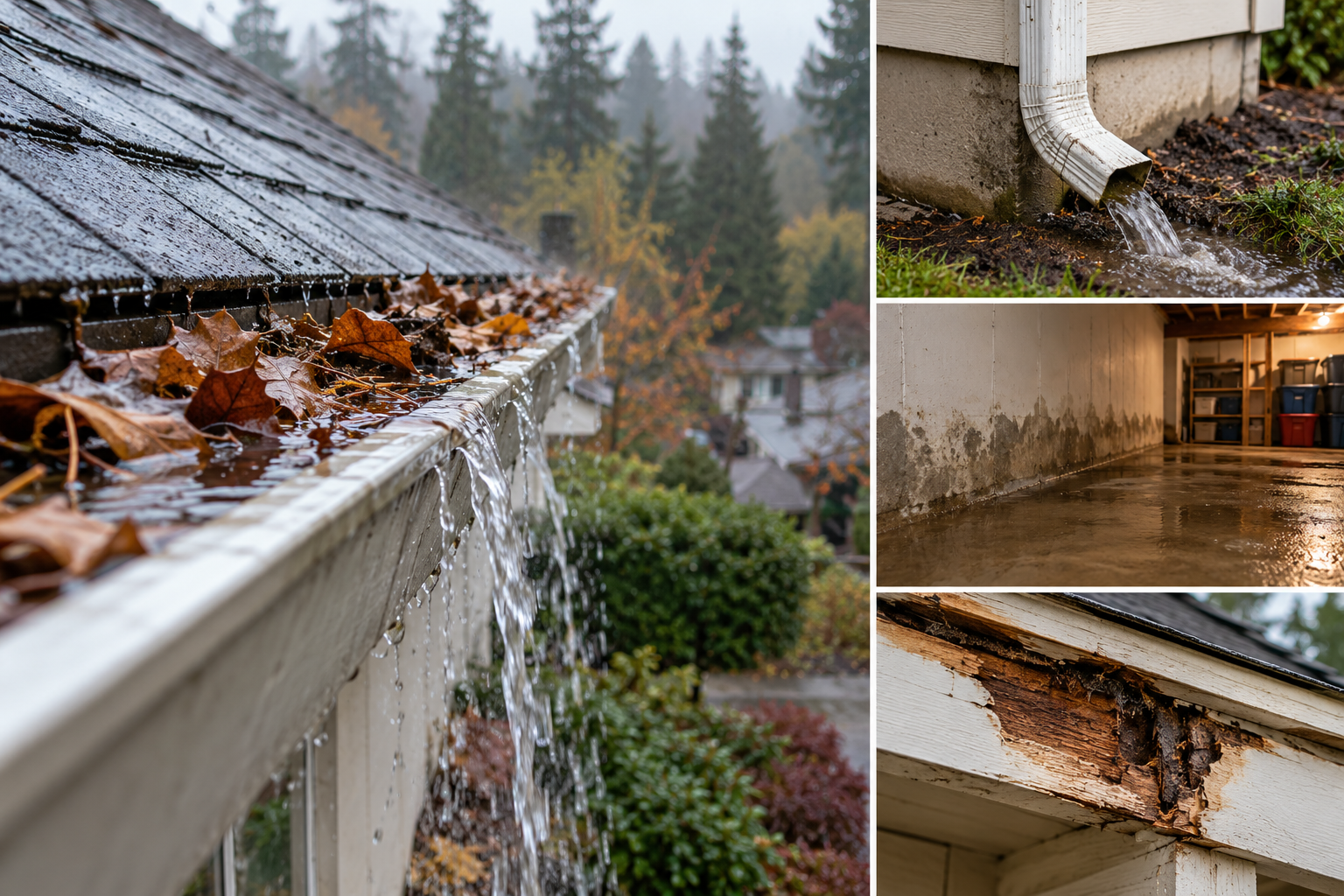
don’t be that guy….
Crawl Spaces—The same thing happens in a crawl space and it can often go undetected for years; I mean…who goes in their crawl space?? This leads to poor interior air quality in your living space, mold in the crawl and attic, and a host of other problems.
Structurally—Dry rot can develop from the facia to the lowest course of siding and everywhere in between depending on where the water is overflowing. Over time, that rot can go deeper into the sheeting and framing of your home. Once it hits the ground, the water can erode the soil adjacent and under your foundation. This one takes a little longer, but I’ve seen some pretty big cracks form right next to the sink hole that the overflow has created. What could have been a 10-minute homeowner fix in 2016 can turn into tens of thousands of dollars in 2026.
The Bottom Line—Clean your gutters early and often! And be safe about it! Usually best to hire a contractor. Fancy gutter systems in the Pacific Northwest? I’m not a fan. Too many reasons to type out; give me a call if you want me to talk you out of Leaf Guards or the like.
*the other 5% are from leaking plumbing supply line or drain, ground water coming from underneath, or something even more mysterious.